Open office interior with black chairs and a long communal table.

Commercial

Commercial cleaning services

Commercial cleaning for buildings that have to open on time, with a scope a facility manager can hand to someone else.

For facility teams

Who this is for

People who answer for the building

This work is for facility managers, property administrators, and office managers who need a scope they can defend. You might oversee one suite or several floors. You might be new in the role and inheriting a vendor whose checklist lives in someone’s head. The useful first step is a written description of zones: lobby, work areas, kitchens, restrooms, glass, and any room that is off limits. We would rather spend time on that page than on a tour that never becomes a document. If a board, a tenant, or a landlord asks what the cleaners do, you should be able to show them the same page we use.

Owners of a single professional suite are welcome, and so are managers of a multi-tenant floor, as long as access and responsibility are clear. A dentist’s waiting room, a shop after close, a school once the children are gone, and a warehouse break room can all be commercial work. They are not the same visit. Each one gets its own scope, its own timing, and its own note about what we will not do. If you need a specialty page for the building type, start with office cleaning, janitorial services, retail cleaning, restaurant cleaning, medical office cleaning, school and daycare cleaning, or warehouse cleaning, then come back here for the way the program is built.

A house clean is a different assignment

A house clean is organized around rooms people live in. Someone may be home. A pet may have opinions. Laundry, dishes, and the way a family actually uses a kitchen are part of the plan, and the visit often happens in daylight. Commercial cleaning is organized around a building that has to reopen. The crew is usually in the space when the tenant is gone. Alarms, elevators, loading rules, and a key protocol matter as much as the mop. The standard of care can be equally serious in both settings. The checklist should not be copied from one to the other, because a bedroom and a server closet fail in different ways if someone guesses.

House cleaning also tends to judge success by how the home feels to the people who sleep there. A commercial floor is judged by the first person through the door in the morning, and by the facility lead who walks it later with a list. Smells are a weak measure. Edges, emptied bins, stocked restrooms, and glass without streaks are stronger ones. If you want a home on a weekly rhythm, that belongs on house cleaning or recurring cleaning. If you want both a residence and a small studio, ask for two scopes so the tasks do not blur into a single vague visit.

Industries, in outline

Offices are the most common request: suites and full floors where desks, kitchens, conference rooms, and restrooms set the pace. We describe that pattern on the office page, including what happens to papers left on a desk. A commercial program can also cover a lobby shared by several tenants, if the property manager, not each tenant, owns the scope and the access. Shared corridors get missed when everyone assumes someone else asked for them. Put the corridor on the page or leave it off. Do not leave it implied.

Warehouses and light industrial floors can include restrooms, break rooms, and walkways that are safe to enter. Hazardous waste, confined spaces, and heavy equipment cleaning are out. Post-construction dust is a separate project, described under post-construction cleaning, because a nightly janitorial visit is not built to remove construction film from an entire floor. If your building mixes an office with a shop floor, say so at the quote. We will split the zones on paper so the office standard is not used to judge a dock, and the dock is not quietly added to an office price.
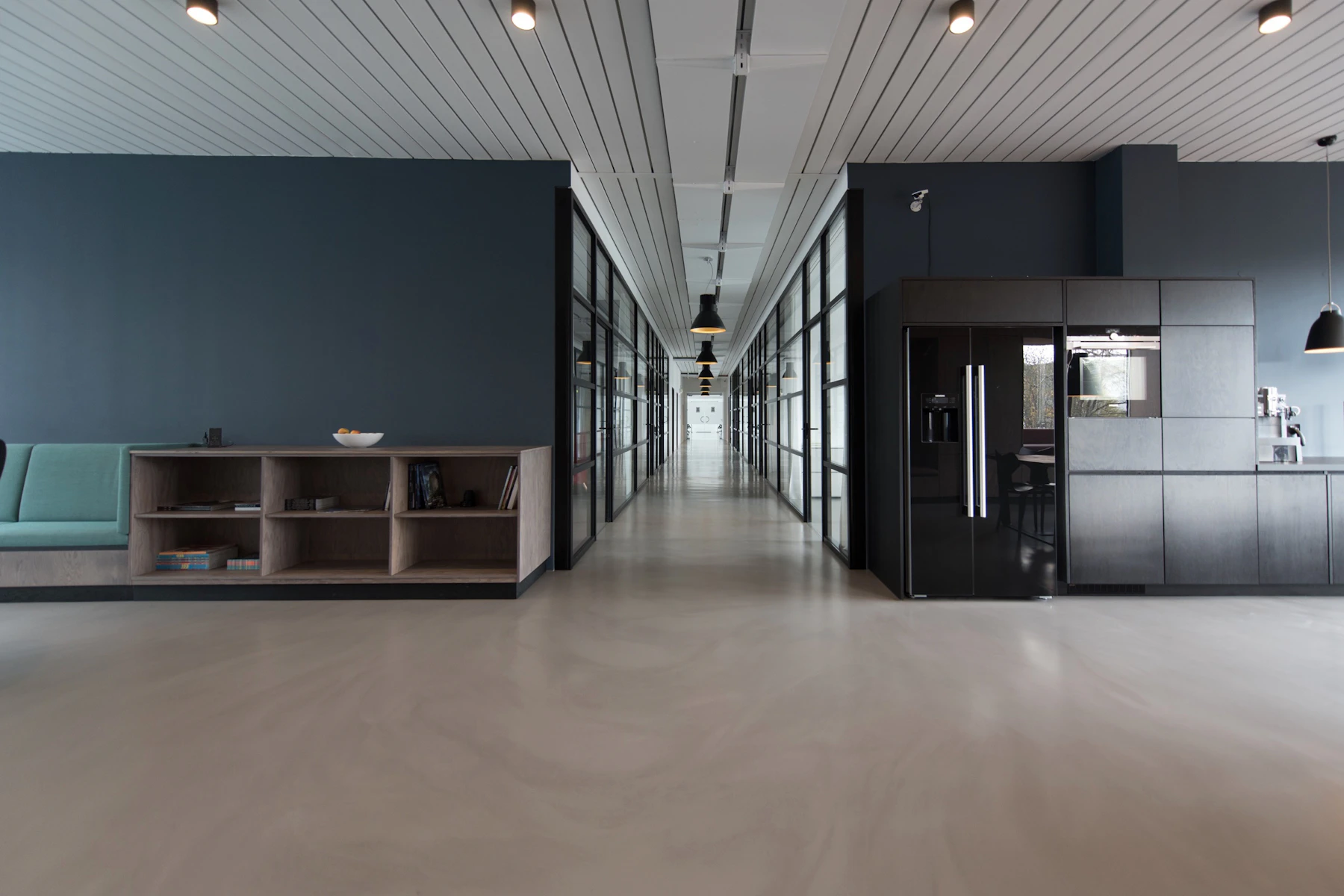

Open office interior with black chairs and a long communal table.
Commercial work is judged in the morning, by the rooms people use first.

Written scope

What the visit includes

  • Trash and recycling removed to the containers, dock, or chute you specify, with a note about cardboard if it must be broken down.
  • Restrooms cleaned and restocked from the paper, soap, and liners you provide, unless the scope says we supply those consumables.
  • Floors vacuumed, dust-mopped, or damp-mopped according to the surface, including spots called out in entries and kitchens.
  • Kitchenette counters, sinks, tabletops, and the outside of appliances wiped. Interiors of refrigerators and ovens only if written in.
  • Conference and huddle rooms reset: cups removed, tables wiped, chairs straightened when that is on the list.
  • Interior glass and partitions we can reach safely from the floor, including smudges at handle height.
  • Dusting of open horizontal surfaces that are clear. Cluttered desks are edged only, or skipped, according to your instruction.
  • A short note back to you when something is broken, leaking, or blocking the work, instead of a silent workaround.

If a task is missing from that list and you care about it, add it before we price the night. High dusting, interior windows above a safe reach, stairwells, and elevator tracks are common add-ons, and they change the time. So does a requirement to separate compost, to log restroom checks, or to stay out of a lab. The quote should read like instructions, not like a brochure.

How a program starts

Steps you can expect

  1. You send the address, timing, restroom count, and any rule that would surprise a new person on the floor.
  2. BRERH reviews the property details, access requirements, and requested timing.
  3. You receive a written scope and a price tied to that scope.
  4. Access, alarms, parking, and a contact for the night are written down before the first visit.
  5. A date and timing window are confirmed separately from this website.
  6. The route continues on the agreed cadence until you change it in writing.

What to prepare

On the floor itself, ask staff to clear food, mark anything that must not be moved, and keep the supply closet stocked if you are providing paper and soap. Tell us where the mop sink is, where trash leaves the building, and which lights we may turn off. If a tenant works late, give us the nights that happen so we do not plan a full restroom service in an occupied room. Parking and loading instructions belong in the access plan so travel inside the property does not displace the cleaning scope.

Scheduling and after hours

Most commercial programs run after the tenant leaves or before the first arrival. A typical office wants evenings. A clinic may want early morning. A restaurant wants the window after service, which is a different clock from a law office. We schedule the visit inside the window you can actually give us, and we say so if the window is too short for the list. Compressing a full floor into a half hour produces a restroom that was visited and a kitchen that was not. You should know which one you are buying. Holiday calendars, inventory nights, and photo shoots belong on the schedule before they belong in a complaint.

Same-week starts are sometimes possible when the calendar already has room. We do not promise instant dispatch, and we do not keep a crew idle for emergencies that have not been scoped. If you need a one-night reset before an event, say that it is a project, not the start of a route, so the price and the crew match the work. Ongoing commercial cleaning and a one-time project can live in the same building. They should not share one vague line on an invoice. Changes to nights, access, or the task list should come from the person allowed to approve them, during the desk hours above, so the route is not edited by a side conversation.

What stays off the list

Exclusions protect both the building and the crew. They are part of quality, not a footnote. If you need one of these tasks, ask. Some can be quoted separately. Some we will decline because they are a different trade.

  • Exterior glass above a safe reach, lifts, and rope access. We do not improvise height.
  • Construction cleanup and fine post-construction dust across a whole floor, unless that project is scoped on its own.
  • Moving heavy furniture, IT equipment, servers, or medical devices. Light chairs in a conference room are a different matter and should be stated.
  • Personal desks buried in paper, drawers, and the inside of cabinets we were not asked to open.
  • Pest control, grounds, snow, and parking-lot sweeping.

Related services

Questions from facility teams

Preview fields for the address, the nights, and the rooms that have to be ready. Preview Quote Details.

Close view of a stone surface in even light.

Next

Tell us about the space.

Call +1 (816) 321-5030 or email [email protected]. The quote form on the contact page is a preview and does not send a request.

Contact BRERH