Dining room and restrooms
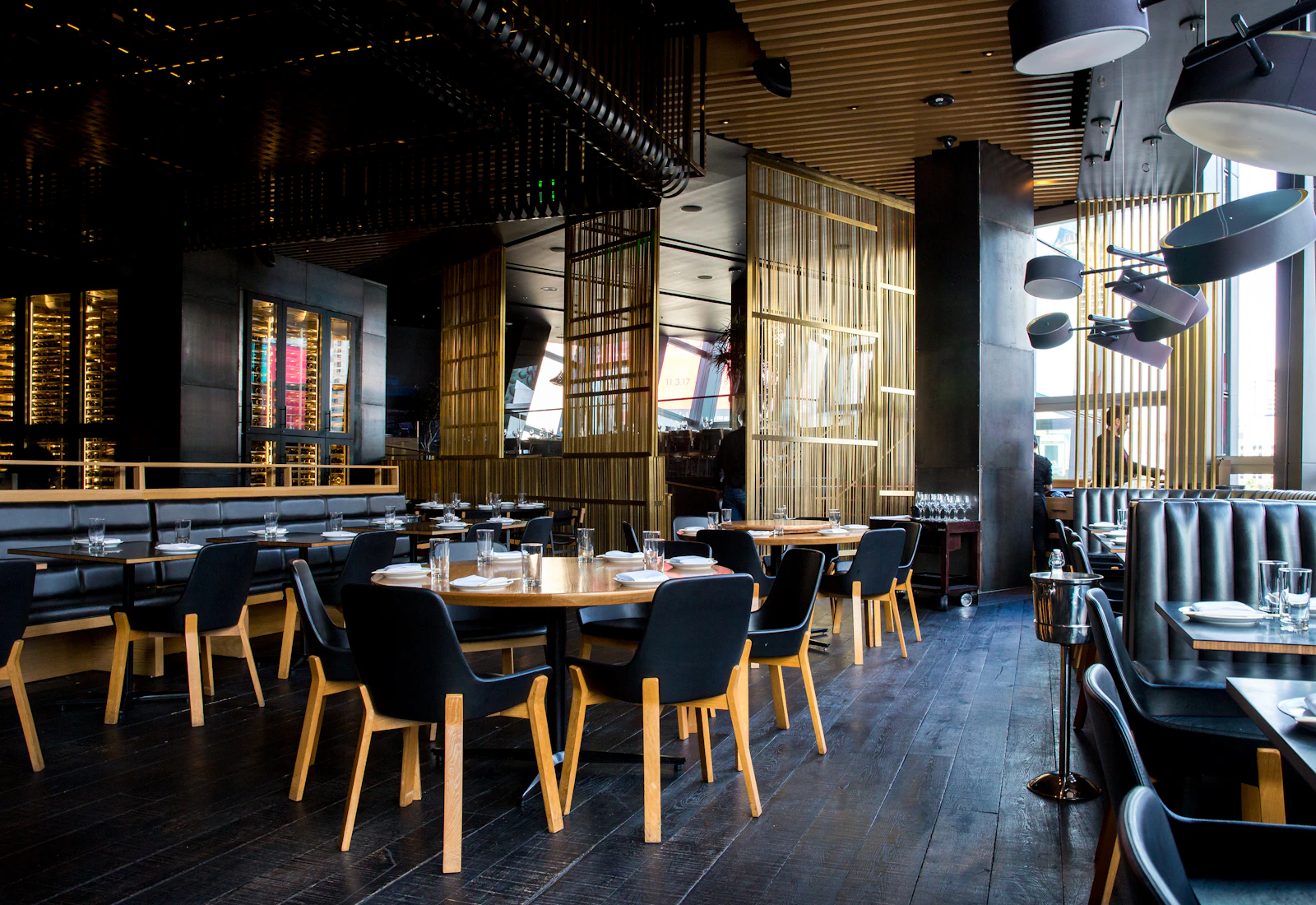
The dining room work happens after service, or in a window you set between lunch and dinner if the room can actually be empty. Tables and chairs are wiped. Banquettes are cleaned on the surfaces a guest touches, without soaking a fabric that the scope has not approved. Floors are swept and washed for the material: tile, sealed concrete, or wood that cannot take a wet mop the way a quarry tile can. Glass at the entry and interior partitions are cleaned when they are reachable. We reset chairs so the room looks ready. We do not redesign the floor plan, move a featured table the manager set, or clear a reservation book. Menus and check presenters stay unless you asked for them to be stacked in one place.
Restrooms are part of the standard scope because guests judge them as quickly as the dining room. Fixtures, partitions, mirrors, floors, and dispensers are the work. Paper and soap are replaced from the stock you keep on site when restocking is written in. We do not supply your consumables out of an unnamed budget. A restroom that needs a plumber, a new partition, or a tile repair is noted and left. See floor cleaning if a grease-tracked entry or a specific stone needs its own method. The crew works after close or in the hour you lock the door. A vacuum or a floor machine during seating is a different conversation, and most rooms should not have it.
Kitchen only by agreement
Equipment that is hot, running, or still in a cook’s hands stays closed. We do not scrape a flat-top that your closing cook owns as part of their checklist unless you move that task to us in writing and the surface is cool enough to approach. Lowboys are wiped outside. Food inside them is yours. We do not discard product to make a shelf look empty. Mats are lifted, the floor under them is cleaned, and the mats go back when they are part of the agreed floor work. A floor drain is cleared of ordinary surface debris. It is not snaked, and it is not a plumbing repair. Chemical storage stays as you left it. Food-contact sanitizer programs, inspector-required labels, and other compliance-controlled product systems are outside the website’s represented scope unless separately verified.
After close
Access is an alarm, a key, a manager who locks up, or a service door with a code. Send the real procedure. A crew that cannot arm the panel is a crew that should not be the last one out, and the quote should say who remains responsible for the building. Lights, music, and the patio heaters are your closing list unless you assign specific switches. Patio furniture can be wiped when the patio is part of the dining scope and the weather allows. We do not stack chairs on a public sidewalk against a city rule you have not explained. Trash goes to the dumpster or the grease barrel you designate. We do not haul grease away as a rendering service, and we do not sign a waste manifest.
Standard close-down
Treat the lines below as the dining-room and restroom default. Add kitchen lines only after you and BRERH have written them. If a line is your cook’s job tonight, leave it off our list so two people do not assume the other one has the flat-top.
- Dining tables, chair frames and seats, and the host stand wiped after service.
- Floors swept and washed for the material, including under tables that can be moved safely.
- Entry glass, interior partitions, and mirrors reached from the floor.
- Restrooms: fixtures, partitions, floors, mirrors, and dispensers filled from your stock.
- Bar top and the guest side of the bar, when the bar is in the front-of-house scope.
- Trash taken to the containers you assign, without grease hauling or manifests.
- A patio or sidewalk seating area only when it is named and local rules allow the work.
- Kitchen floors, exteriors, and the pass only when those lines are in the agreed scope and equipment is off and cool.
If the menu changes the soil, say so. A bakery case and a late-night fryer do not leave the same floor. The written scope can be revised between seasons. It should not be revised by a text sent after the crew has already started the dining room.
Questions
Only to the extent the written scope says so. The standard visit is the dining room and the restrooms. Kitchen floors, the pass, hand sinks, and the exterior of cool, powered-down equipment can be added line by line. They are not assumed because the word restaurant appears on the invoice. Food, lowboy contents, and a line your closing cook still owns stay with your staff unless you move a task to us on purpose. Restaurant cleaning services do not include turning equipment on, testing gas, or finishing a cook’s breakdown that was never handed over. If you want the kitchen every night, list it. If you want it twice a week, list that rhythm. A vague “kitchen too” becomes an argument at midnight, which is a bad time to rewrite a scope.
Ordinary dining-room and restroom products can be discussed as part of a separately confirmed scope. Food-contact sanitizer programs, inspector-required labels, logged concentrations, and other compliance-controlled kitchen systems are outside the website’s represented scope unless separately verified. Products are not mixed, and this page does not represent a sanitizing or food-safety program.
Grease-trap pumping, rendering, pest control, plumbing, and equipment repair are out. We do not haul grease, sign waste manifests, or pretend a floor drain backup is a mop job. Exterior signage high on the facade, roof work, and any glass that needs a lift are out. Patio work stops where the city or the landlord says vendors may not stack furniture. We do not move a reservation system, count a till, or restock a bar well. Glassware and plateware can be wiped and returned to the place you name. They are not reorganized into a new mise. Restaurant cleaning services also skip any area a closing manager has not released, including a walk-in that is still being counted. If you want the walk-in floor, put the hour after the count on the scope.